
10 Things No One Tells You About Postpartum Depression (That I Learned Writing 'Shadows of the…
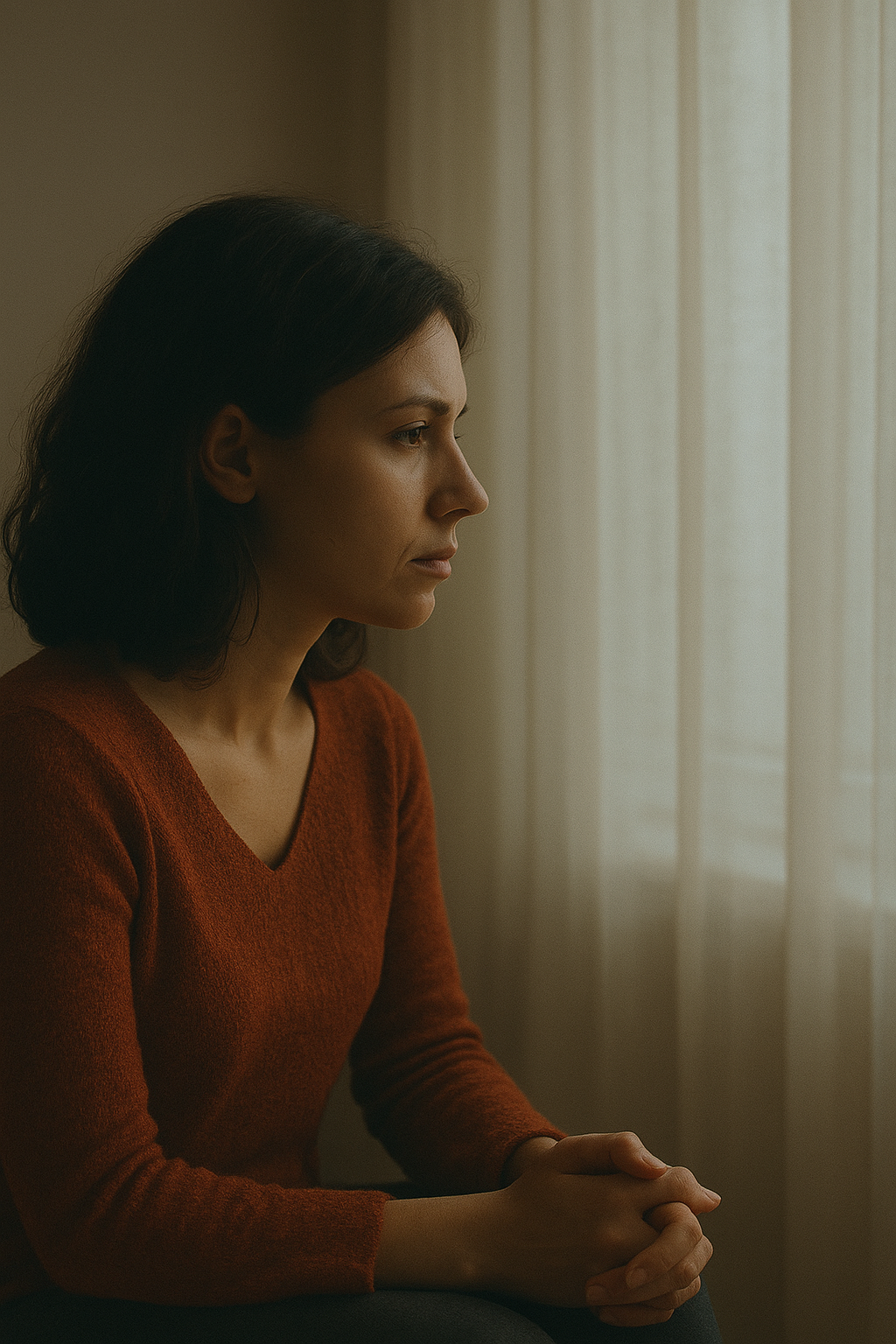
"I don’t feel like a mother. Not the way I’m supposed to."
These are the words my protagonist Emma Hart whispers in her first therapy session. And based on the messages I've received since publishing Shadows of the Cradle, they're words thousands of women have thought but never said aloud.
Here are 10 truths about postpartum depression that no one prepares you for:
```
THE 10 THINGS (with book excerpts):
1. Love Doesn’t Always Come Naturally—And That’s Okay
The movies show instant bonding. Reality? Sometimes love grows slowly, like a plant you have to tend even when you don't feel like it.From Shadows of the Cradle: "Emma commanded herself silently, desperately: *Love him. Feel something. But the disconnect only widened, a chasm opening between the mother she was supposed to be and the hollow shell she’d become."
What this means: If you don’t feel overwhelming love immediately, you’re not broken. You’re human.
---
2. Sleep Deprivation Isn’t Just Tiredness—It’s a Mental Health Crisis
After 72 hours of broken sleep, your brain starts to malfunction. Decision-making becomes impossible. Reality distorts.From the book: "In the depths of her exhaustion, Emma began to wonder if this was what madness felt like—not the dramatic kind from movies, but the quiet kind that crept in through sleepless nights and unanswered questions."
What helps: Sleep is not a luxury. It’s medicine. Accept help. Let others hold the baby while you rest.
---
3. The Silence Is What Kills You
PPD thrives in isolation. When you believe you're the only one feeling this way, shame multiplies.Grandmother Lucy’s wisdom: "Now, women suffer in silence. They smile when visitors come, they post beautiful pictures, they pretend the transformation is seamless. And when the darkness comes—they think they are the only ones, the first ones, the failed ones."
Breaking the silence: Join a support group. Tell one person. Read stories from women who’ve been there.
---
4. Your Partner Can’t Read Your Mind (But They’re Scared Too)
Daniel wanted to help Emma but didn't know how. His attempts felt like pressure. Her silence felt like rejection.From their couple’s therapy: "Daniel: 'I don’t know how to help her. Everything I do feels wrong.' Emma: 'Because you keep trying to fix me. Like I’m something broken.’"
What partners need to know: You can’t fix PPD. But you can witness it. Listen without solving. Hold space without judgment.
---
5. Family Expectations Can Be Crushing
Well-meaning mothers-in-law, relatives who "bounced back" in six weeks, advice that feels like criticism.Margaret’s words: "You should be cherishing this time. They’re only little once."
The truth: Cherishing requires capacity for joy. When you’re drowning, asking you to appreciate the ocean is cruel, not kind.
---
6. Therapy Isn’t Giving Up—It’s Showing Up
The hardest part isn't the first session. It's dialing the number. Making the appointment. Walking through the door.Emma’s breakthrough: "For the first time since Eli’s birth, someone wasn’t telling her how she should feel or what she should do. Someone was simply asking her to exist in her truth, messy and uncomfortable as it was."
If you take nothing else from this: Asking for help is not weakness. It’s the most radical act of self-love.
---
7. You Might Not Recognize Yourself—And That’s Part of the Process
The woman you were before the baby? She's gone. The mother you thought you'd become? She doesn't exist. You're in between—and that's terrifying.Emma’s confession: "I don’t think she exists anymore. I’m still looking for her too."
The reframe: You’re not lost. You’re becoming. Transformation looks like destruction before it looks like rebirth.
---
8. Other Mothers Are Your Lifeline
Not the perfect Instagram ones. The real ones—messy hair, baby formula stains, honest about the struggle.Bami’s words that saved Emma: "You’re not broken. You’re just under renovation. It’s messy because it’s real."
Where to find them: Postpartum support groups, online forums, that mom at the café who looks as exhausted as you feel.
---
9. Healing Isn’t Linear—It’s a Spiral
Good days. Bad days. Days where you take ten steps forward and five back. That's not failure. That's healing.From the book: "Healing, I’ve learned, is not a straight ascent. It is a spiral—we return to the same wounds, but we meet them at higher ground."
What this looks like: Some mornings you’ll feel light. Some nights you’ll cry. Both are part of the journey.
---
10. The Shadows Don’t Disappear—But They Stop Leading
Recovery doesn't mean erasing the pain. It means learning to walk with it, to let it inform you without defining you.Emma’s final realization: "The shadows still visited sometimes, soft reminders of what she had overcome. But they no longer frightened her. They framed the light."
The gift: The woman who survives postpartum depression becomes someone who knows her own strength. Someone who can hold both shadow and light.
---
If you're reading this while sitting in the dark at 3 a.m., wondering if you're the only one—you're not.
If you're wondering whether to call that therapist—do it.
If you're wondering whether you'll ever feel like yourself again—you will. Just differently.Emma Hart's journey in *Shadows of the Cradle* is fiction, but the emotions are drawn from hundreds of real women's stories. It's the book I wish existed for every mother sitting in the silence, wondering if she's broken.
You’re not broken. You’re becoming.
---
📖 Shadows of the Cradle: The Art of Becoming Whole is available now on Amazon in Kindle, paperback, and hardcover.
Shadows Of The Cradle: The Art Of Becoming Whole
---
This article draws from my debut novel, Shadows of the Cradle:
The Art of Becoming Whole—a five-part journey through postpartum
depression, healing, and finding your way back to the light.
If this resonated with you, I’d be honored if you’d:
- Leave a comment sharing your story
- Share with someone who needs to hear this
---
10 Things No One Tells You About Postpartum Depression (That I Learned Writing 'Shadows of the… was originally published in Insight Avenue on Medium, where people are continuing the conversation by highlighting and responding to this story.
http://dlvr.it/TP5Kwy


Comments
Post a Comment